
What you say, how you say it, and whether anyone is listening. It all starts here.
Most businesses are holding great cards.
The service is genuine. The work is of high quality. But something is not connecting as it should. The phone is quieter than anticipated. The website attracts visitors who do not stay. The leads arrive but go elsewhere.
The product is rarely the problem.
The communication is.
Branding Is the Conversation Your Business Is Already Having
Walk into almost any local business and pay attention to what you notice before anyone says a word. The font on the sign. The way the van looks parked out front. The hold music when you call. The email signature on the follow-up. The business card handed over at a networking event. The voicemail greeting when nobody picks up.
Every one of those things is saying something right now, whether it was planned or not.
Branding is not just the logo, color palette, or mood board. It is the communication system your business runs on, at every point of contact, long before a sales conversation starts.
Princeton University research found that people form an initial impression in one-tenth of a second.1 Full judgment on trustworthiness and competence is locked in by the seven-second mark.2 That window is not long enough to read a tagline. It is barely enough time to register whether something feels right.
55% of a brand's first impression is visual.3 No words exchanged. No pitch delivered. Just an immediate, subconscious reaction to what the business looks like.
Nielsen Consumer Neuroscience studied 3,200 people across the United States, the United Kingdom, Germany, and Japan, and found that cluttered or inconsistent logos trigger cognitive dissonance in 74.6 percent of participants within the first five seconds of exposure.4 That is the moment a potential customer keeps scrolling.
The name is the first thing the market ever hears. When it tells a stranger nothing, the business becomes invisible before the conversation even starts. Seventy-one percent of businesses agree that inconsistent or unclear brand presentation directly confuses customers.5 And confused customers tend to find someone easier to understand.
Lucidpress tracked 1,800 global brands and found that strict brand consistency led to an average revenue uplift of 23 percent — just from showing up consistently wherever customers encounter the brand.6
What the Brand Is Actually For
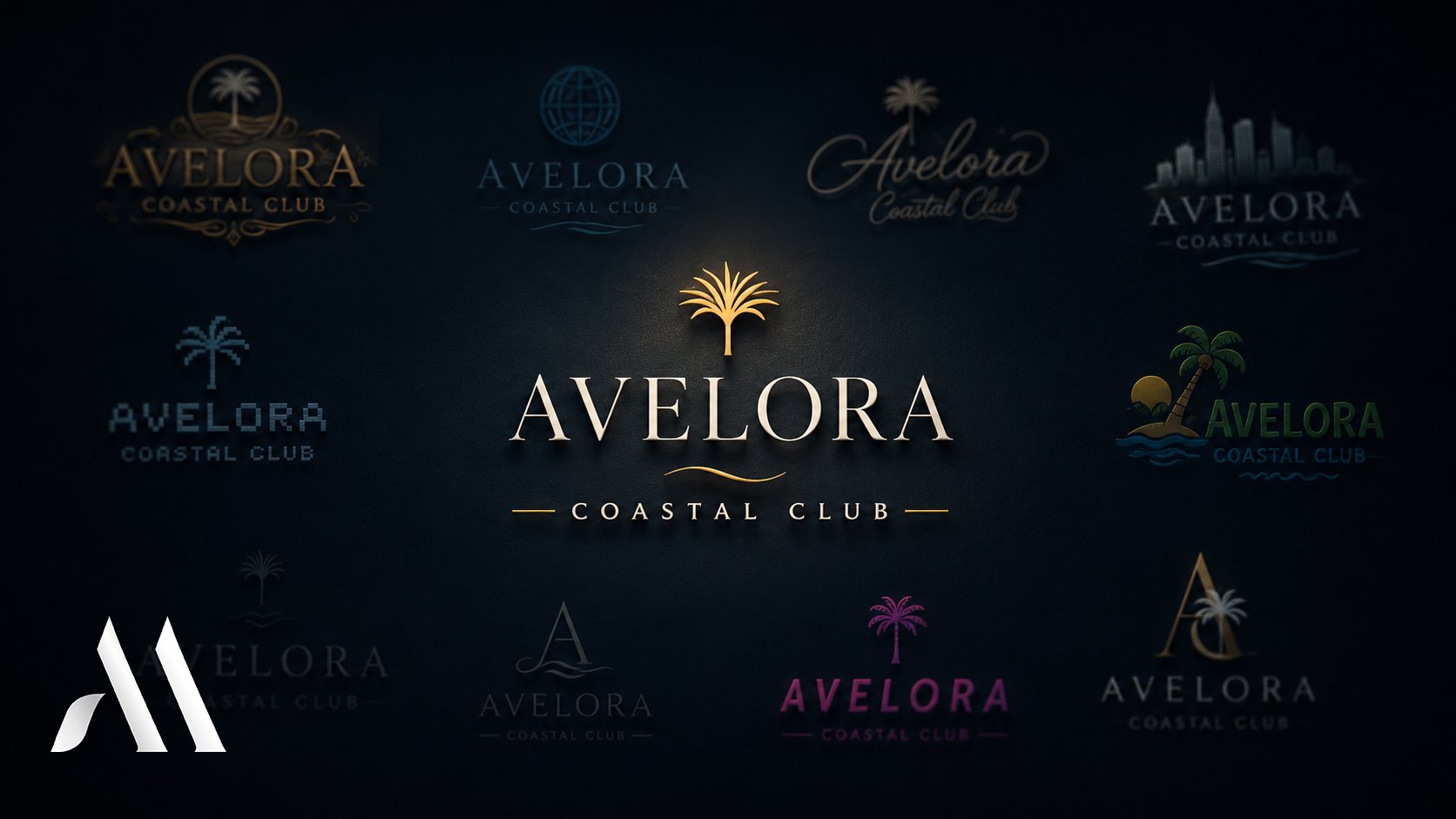
When Araya was being built, ideas for the logo were considered. Buildings. Skylines. Visual references that carried personal meaning, things that represented ambition and scale, and what the business was working toward. And then a simple question had to be answered.
Does any of that mean anything to the person we are trying to reach?
The answer was no.
The logo, name, website copy, tagline, and color choices are not for the founder. They exist to make a stranger feel this business understands what they need and earns their trust to learn more.
That is the job.
Marketing is the act of communicating the right message to the right person at the right moment in a way that makes them want to take a step. A brand strategy that answers three things gives that communication its foundation: who the audience is, what outcome is being promised, and why this business is uniquely equipped to deliver it.7
When personal attachments are set aside, and clarity takes over, what remains is the strategy. Clean, specific, immediate. Something a stranger can understand at a glance.
Brands with consistent, clear presentation are 3.5 times more visible in the market.8 Clarity compounds and strengthens memory with each consistent impression. Six to seven impressions make a generic brand familiar, but a specific one sticks faster because defined patterns are retained more efficiently than abstract ones.9
Fifty percent of consumers are more likely to buy from a brand they recognize over one they do not.10 That recognition is built one consistent impression at a time.
Great Work Deserves to Be Understood
Ninety-four percent of all first impressions are design-related.11 Stanford University found that 75 percent of consumers judge a business's credibility solely by its website design.12 A site that feels dated, cluttered, or hard to navigate does not just need a redesign — it needs a complete overhaul. It is quietly costing the business the trust it worked hard to earn.
38.5% of users leave a website immediately due to poor design.13 They do not make it to the service page. They do not find the contact form. The work behind the business never gets a chance to speak for itself.
McKinsey's Brand Performance Index, conducted in 2026, surveyed 2,400 companies across North America and Europe. Organizations with consistent cross-channel messaging reported revenue increases averaging 33.7 percent.14 Not from better products. From a clearer message delivered consistently across every place the customer shows up.
Improving sales conversion by just 10 percent through clearer messaging generates six to twelve times return on the investment made to fix it, within the first year.15 That is a significant return on something that starts with getting the communication right.
Great work deserves a message that does it justice.
Earning Attention Is Only the First Part
The name worked, branding was consistent, and the message landed. Someone filled out the form, sent the email, or made the call.
What happens next is where most of the opportunity either gets captured or quietly slips away.
Seventy-nine percent of marketing leads never convert to sales.16 Not because the leads were wrong. Because the system to catch them, follow up with them, and move them forward was not fully in place.
Drift and the Sales Management Association surveyed 5,100 sales and marketing leaders in 2026 and found that lead waste from inadequate follow-up had risen to 73 percent.17 For small businesses specifically, the loss rate reaches 81 percent. Organizations without a documented follow-up strategy lose an estimated $287,000 in potential annual revenue for every 1,000 leads generated.
That is a number worth paying attention to.
80% of sales require at least 5 follow-up attempts to close.18 Forty-four percent of business owners and salespeople stop after one. The opportunity does not disappear because the prospect was not interested. It disappears because the conversation stopped too soon.
The Harvard Business Review found the average response time to a web lead was 42 hours, and 23 percent of companies never responded at all.19 Companies that responded within an hour were nearly seven times more likely to qualify the lead than those that waited even one hour longer. The MIT-linked lead response study found the odds of qualifying a lead drop 21 times when the first response stretches from five minutes to 30 minutes.20
The attention was earned. The lead arrived. Keeping the conversation going is where the system either holds or does not.
Three Questions. Six Seconds.
To move from capturing attention to communicating value, a tighter framework is needed for every moment of interaction.
This is the simplest and most useful framework for diagnosing how well a business is communicating.
What do you do?
Express it in a way a stranger understands in six seconds. No jargon, no mission statement, no backstory. Just the clear, direct answer to the most basic question a potential customer is already asking.
Who is it for?
Not everyone. The specific person who needs it most and is ready to move. When someone hears their exact situation named, they immediately feel understood. And feeling understood is what moves people from curiosity to conversation.
What happens next?
One clear step. Not a menu of options. The obvious, frictionless action that moves the relationship forward.
When messaging maps directly to a defined need, marketing spend becomes more efficient, and customer acquisition costs drop.21 The businesses that answer these three questions clearly tend to need fewer impressions to earn the same result.
When the message is clear, the right people find you, and the work speaks for itself.
The businesses that grow consistently are rarely the loudest ones. They are the ones who made it easy for the right person to say yes. Over and over and over.
That is what Araya Marketing & Technology is built for.
If you are ready to close the gap between the work you do and the message the market hears, the next step is a conversation.
Sources
1 Princeton University, cited in Wave Connect, "First Impression Statistics That Will Transform Your Business," February 2026.
2 Wave Connect, "First Impression Statistics That Will Transform Your Business," February 2026. Full judgment on trustworthiness and competence is locked in by the seven-second mark.
3 Amra and Elma, "Top 10 First Impression Marketing Statistics," July 2025. 55 percent of brand first impressions are visual.
4 Nielsen Consumer Neuroscience, cited in Amra and Elma, "Top 20 Brand Consistency ROI Statistics 2026," March 2026. Study of 3,200 participants across the US, UK, Germany, and Japan.
5 Lucidpress and Demand Metric, cited in Wearetenet, "50 Plus Branding Statistics for 2026," 2026.
6 Lucidpress, cited in Amra and Elma, "Top 20 Brand Consistency ROI Statistics 2026," March 2026. Study tracking 1,800 global brands across 14 industries.
7 Asana, "Brand Messaging Framework: Components and 6-Step Guide," April 2026.
8 Lucidpress, cited in Wearetenet, "50 Plus Branding Statistics for 2026," 2026. Brands with consistent presentation are 3.5 times more visible.
9 DesignRush, "Must-Know Branding Statistics for 2026," January 2026. It takes 5 to 7 impressions for a logo to become familiar.
10 Wiserreview, "51 Impactful Branding Statistics," December 2025. 50 percent of consumers are more likely to buy from brands they recognize.
11 Amra and Elma, "Top 10 First Impression Marketing Statistics," July 2025. 94 percent of first impressions are design-related.
12 Stanford University, cited in Paradigm Marketing and Design, "Why Website First Impression Statistics Matter," July 2025. 75% of consumers judge a business's credibility by its website design.
13 Amra and Elma, "Top 10 First Impression Marketing Statistics," July 2025. 38.5 percent of users leave due to poor website design.
14 McKinsey Brand Performance Index, cited in Amra and Elma, "Top 20 Brand Consistency ROI Statistics 2026," March 2026. Survey of 2,400 companies across North America and Europe.
15 Firstwater Advisory, "The Financial Impact of Brand Clarity," 2026. A 10% improvement in sales conversion yields a 6- to 12-fold return within the first year.
16 LeadResponse, "Lead Conversion Statistics 2026: 16 Numbers That Show Why Most Leads Never Become Customers," March 2026.
17 Drift and Sales Management Association, cited in Amra and Elma, "Top 20 Lead-to-Sale Conversion Statistics 2026," March 2026. Survey of 5,100 sales and marketing leaders.
18 Funnel Optimization Statistics 2026, SHNO. 80 percent of sales require at least five follow-up contacts; 44 percent of salespeople give up after one.
19 Harvard Business Review, "The Short Life of Online Sales Leads," March 2011. Average response time: 42 hours; 23 percent of companies never responded.
20 MIT Lead Response Management Study. Odds of qualifying a lead drop by 21 times when the response time stretches from 5 to 30 minutes.
21 Presta, "Startup Brand Strategy Playbook: Position, Message and Design," January 2026.
